


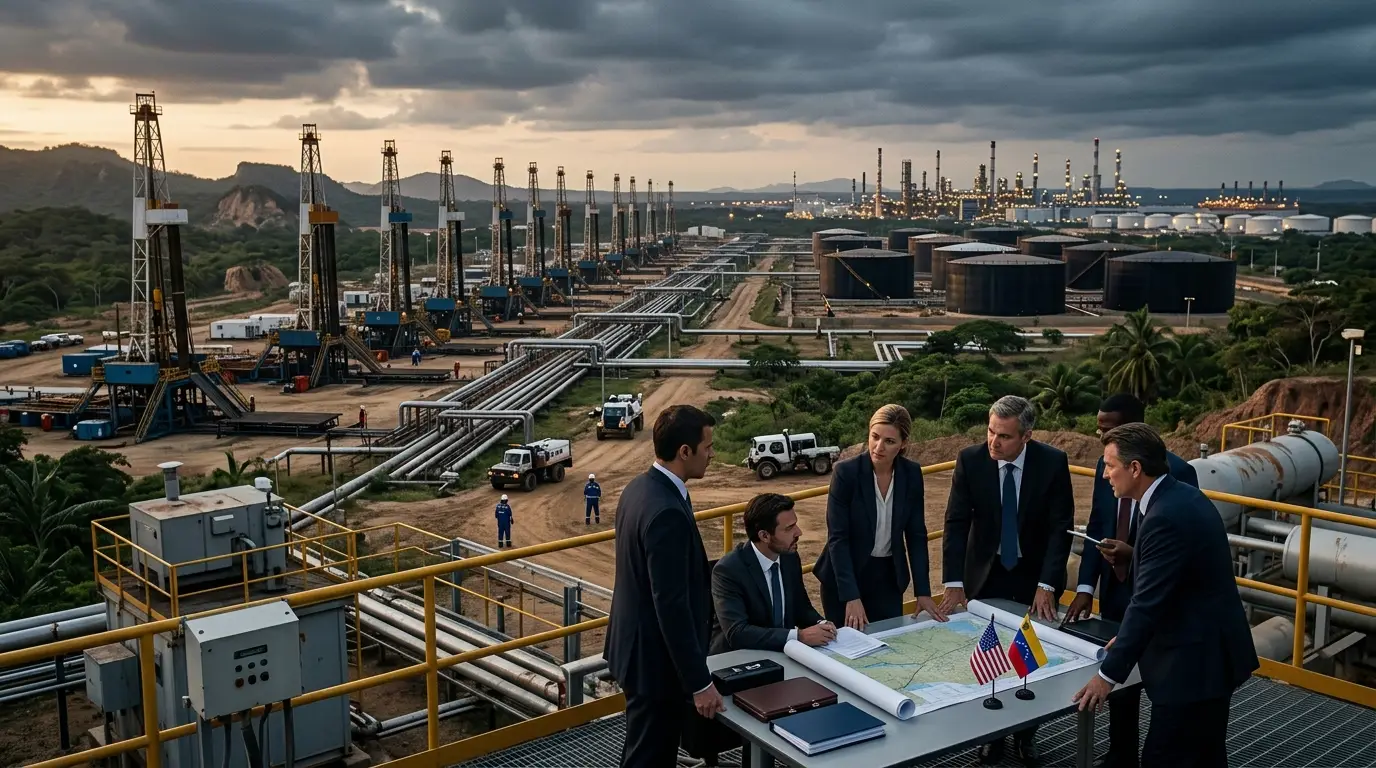


WASHINGTON — President Donald Trump has announced a major agreement giving U.S. interests a leading role in developing Venezuela's oil resources, as the administration looks for additional energy supplies amid elevated fuel prices.
The agreement could reshape the relationship between Washington and Caracas while giving American companies access to some of the world's largest oil reserves.
Washington Looks to Venezuela for More Oil
Trump said the agreement would allow the United States to take effective control of a significant portion of Venezuela's oil production.
The deal involves 17 oil fields with potential reserves estimated at roughly 65 billion barrels. The proposed arrangement would give a U.S.-linked operation a 55% effective stake in output, according to reporting from The Associated Press.
The announcement comes as American consumers continue to face elevated gasoline prices.
The administration has been searching for ways to increase crude supplies and reduce pressure on fuel markets, particularly as the war involving Iran continues to disrupt energy transportation.
Venezuela has enormous oil reserves but has struggled for years with declining production, inadequate infrastructure and political instability.
Reviving production would require substantial investment in pipelines, refineries, drilling equipment and transportation infrastructure.
The proposed agreement could attract billions of dollars in investment if American companies decide that the political and commercial risks are manageable.
Venezuelan officials have described the arrangement as an opportunity to rebuild the country's economy.
Critics, however, question whether the deal can be implemented quickly enough to have a meaningful impact on U.S. gasoline prices.
Industry analysts have also warned that Venezuela's aging infrastructure means a substantial increase in production could take years.
For Washington, the agreement represents both an energy strategy and a major foreign-policy shift.
For Caracas, it offers the possibility of attracting international capital after years of economic isolation.
The agreement will now face scrutiny from investors, lawmakers and energy companies.
Its long-term significance could depend on whether Venezuela can restore production while maintaining political stability.