


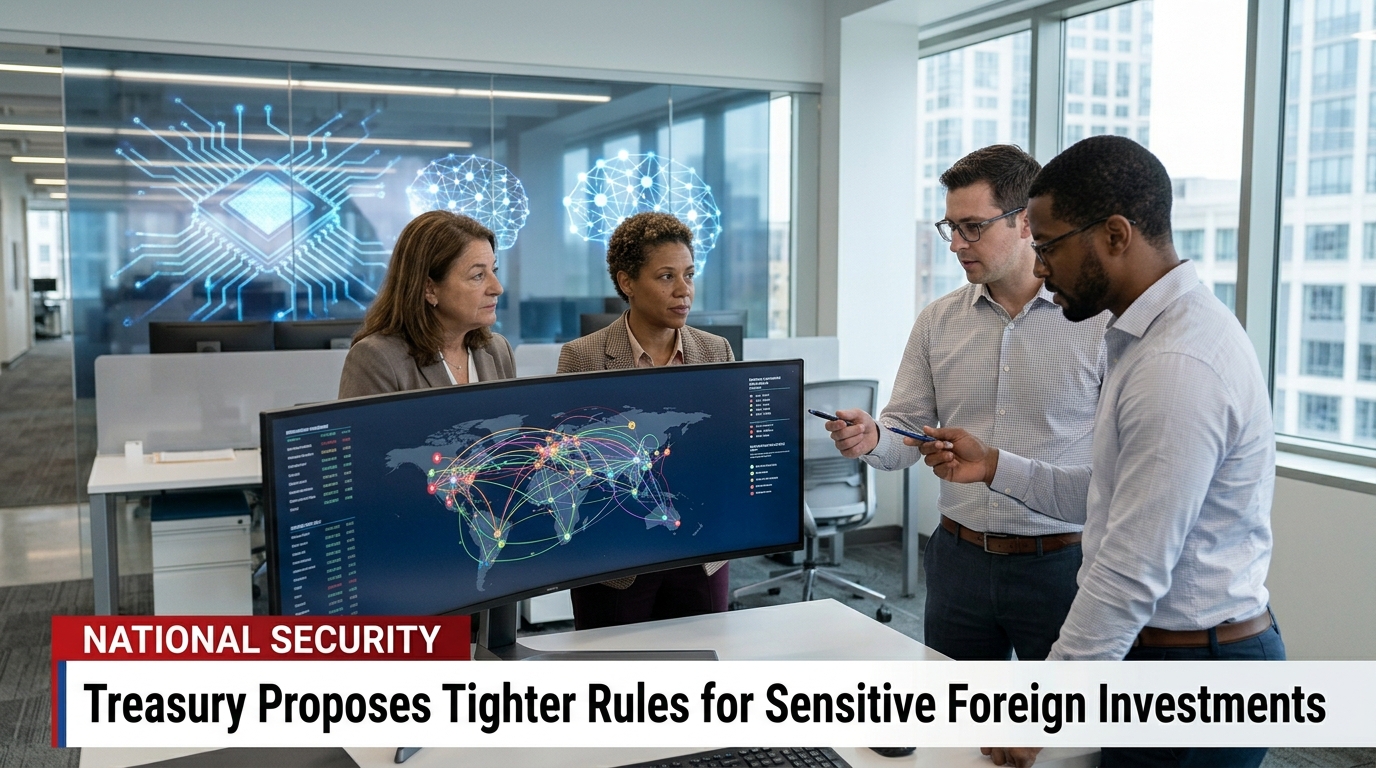


The U.S. Treasury Department has proposed additional restrictions involving certain high-technology investments connected to countries considered adversarial to American national-security interests. The proposal adds to Washington’s effort to scrutinize how U.S. capital, expertise and business relationships may contribute to technologies with potential military or strategic applications.
The initiative raises questions about how the government should balance national-security concerns with the role of international investment in research, business growth and innovation.
Why technology investment is under scrutiny
Advanced technologies can have both civilian and military applications. Artificial intelligence, semiconductor development and other sensitive fields may support commercial products while also contributing to intelligence, communications or defense capabilities.
Federal officials have increasingly focused on whether investments by American individuals and companies can provide capital, technical knowledge or other advantages to organizations operating in sensitive sectors abroad. Investment restrictions are intended to address particular risks, but defining those risks can be complicated.
A proposed rule is not the same as a final regulation. The scope of any restrictions, their effective date and the types of transactions covered depend on the final language and the applicable legal authority.
Implications for businesses
Companies and investors may need to evaluate how the proposal would affect existing arrangements, planned transactions and compliance procedures. Businesses operating internationally often work through subsidiaries, joint ventures, research partnerships and investment funds, making clear definitions especially important.
Overly broad or ambiguous requirements can create uncertainty and discourage lawful commercial activity. Rules that are too narrow, however, may fail to address the risks regulators are attempting to mitigate.
The road to implementation
The Treasury Department’s next steps will determine how the proposal develops and whether revisions are made before finalization. Interested businesses, experts and other stakeholders may examine the language and submit feedback through the applicable regulatory process.
For Congress, the issue intersects with debates over technology competition, economic security and the boundaries of executive authority. The eventual policy will be judged by whether it addresses defined national-security concerns while providing clear standards that businesses can realistically follow.


