


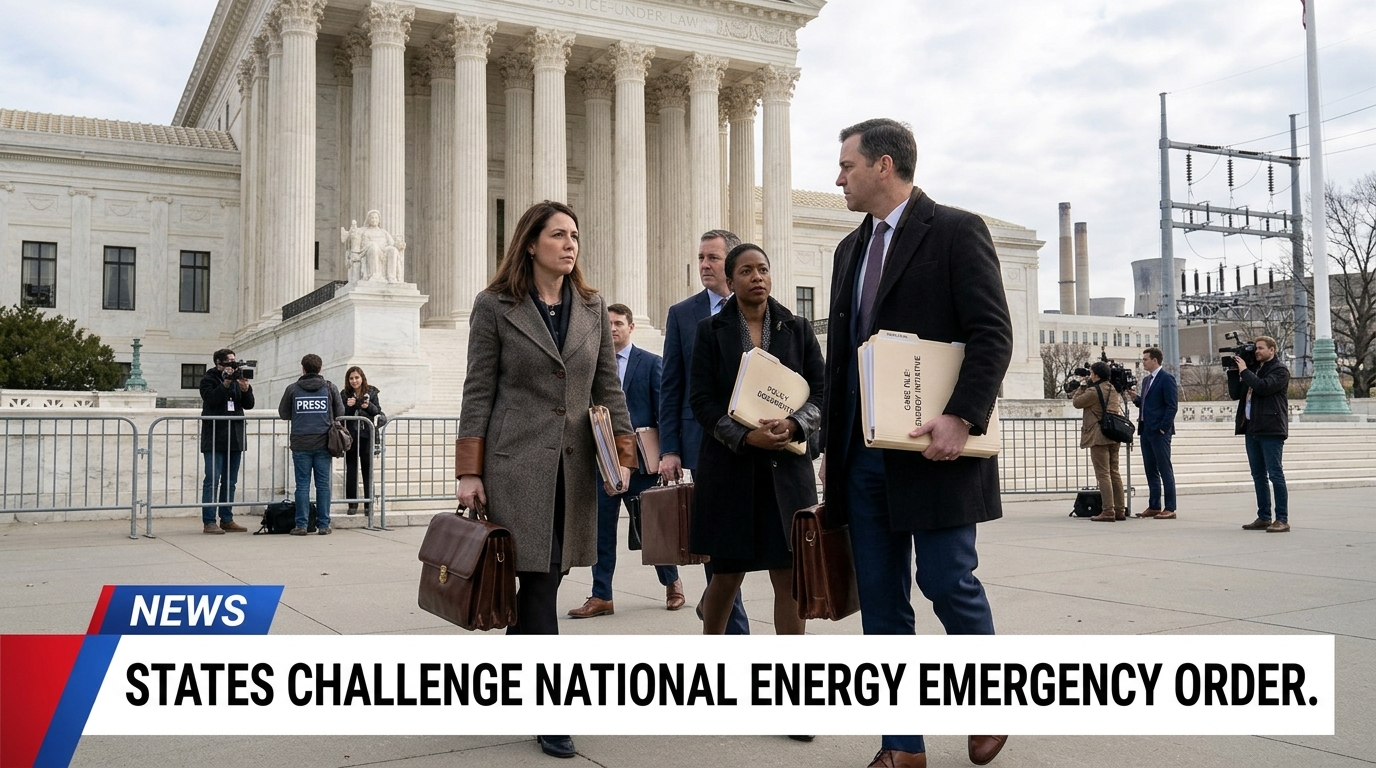


A federal judge is considering a multistate challenge to the Trump administration’s executive order declaring a national energy emergency, a case that could clarify how courts evaluate the legal effects of broad presidential directives.
The dispute focuses on an executive action that has set in motion decisions across multiple federal agencies. The states challenging the administration argue that the order has consequences that warrant judicial review. The administration is seeking to dismiss the lawsuit, while the court must determine whether the claims can proceed under the relevant legal standards.
The central issue extends beyond any single agency decision. An executive order can establish broad policy priorities, but agencies still need to act within their statutory authority and follow applicable legal requirements when implementing those priorities. When one presidential directive influences many separate regulatory or administrative actions, courts may have to decide how closely those downstream decisions can be examined together.
The judge’s consideration of the administration’s dismissal request does not mean the states have prevailed, nor does it establish that the executive order is unlawful. A court may allow some claims to proceed, dismiss others or determine that particular disputes should be considered separately.
The case has implications for the balance between national energy policy and the authority of states to challenge federal action. Energy decisions can affect infrastructure, environmental protections, permitting and the responsibilities of state agencies. Those overlapping interests often make the legal path complex.
For the administration, the case presents an opportunity to defend its use of executive authority and argue that the order falls within the president’s lawful policy powers. For the states, the litigation offers a route to contest actions they believe exceed those powers or cause legally actionable harm.
The next stage will depend on the court’s ruling and the specific claims allowed to continue. The broader question is how the judiciary should review a single executive directive that prompts a large number of agency decisions across the federal government.


