


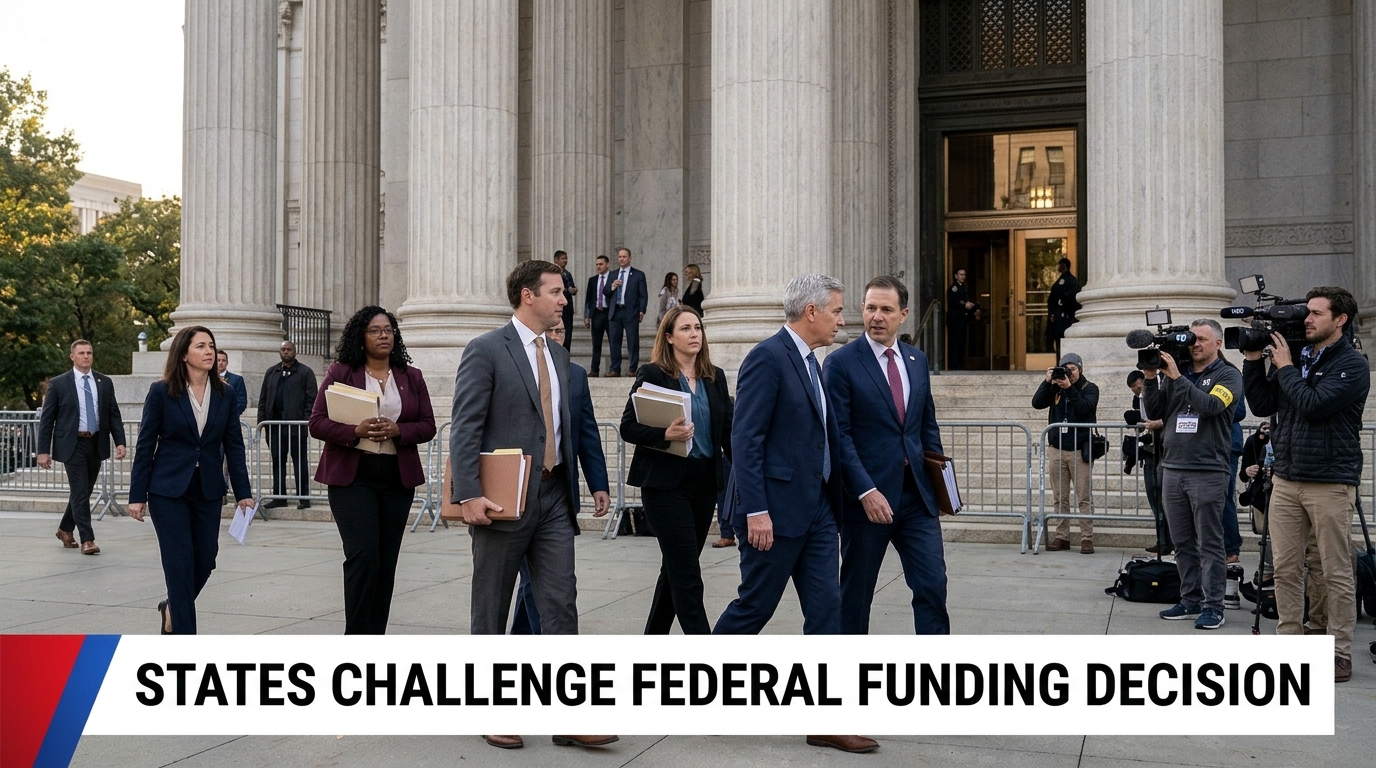


A coalition of states is challenging the Trump administration’s decision to withhold federal funds that lawmakers had previously approved, setting up another legal dispute over the division of spending authority between Congress and the executive branch.
California and six other states filed suit after the administration moved to cancel or withhold hundreds of millions of dollars before the end of the fiscal year. The states argue that the executive branch cannot effectively prevent money authorized by Congress from being spent simply because the president objects to the purposes of the programs.
The dispute centers on a budget maneuver critics describe as a “pocket rescission.” Under that approach, the administration asks Congress to cancel funding so close to the end of a fiscal year that the money may expire before lawmakers have a meaningful opportunity to act. The states contend that this undermines Congress’s constitutional control over federal appropriations.
The administration has defended the funding decisions by arguing that the affected programs conflict with its policy priorities. That disagreement raises a central question in federal government: how much discretion does a president have when implementing a budget enacted by Congress?
The lawsuit asks the court to assess whether the administration’s actions comply with constitutional and statutory requirements governing federal spending. Filing the case does not itself establish that the administration acted unlawfully; the claims must be considered through the judicial process.
The outcome could matter beyond the specific funds at issue. Federal grants support programs operated by states and local governments, and uncertainty over whether appropriated money will be released can complicate planning, contracts and service delivery.
The case also tests the practical limits of congressional oversight. Congress controls appropriations, but presidents and executive agencies play a substantial role in carrying out spending decisions. When those responsibilities collide, courts may be asked to determine whether an administration has crossed the line from implementing policy into effectively revising a law.
The litigation remains part of a broader debate over presidential spending authority, congressional power and the reliability of federal funding commitments.


