

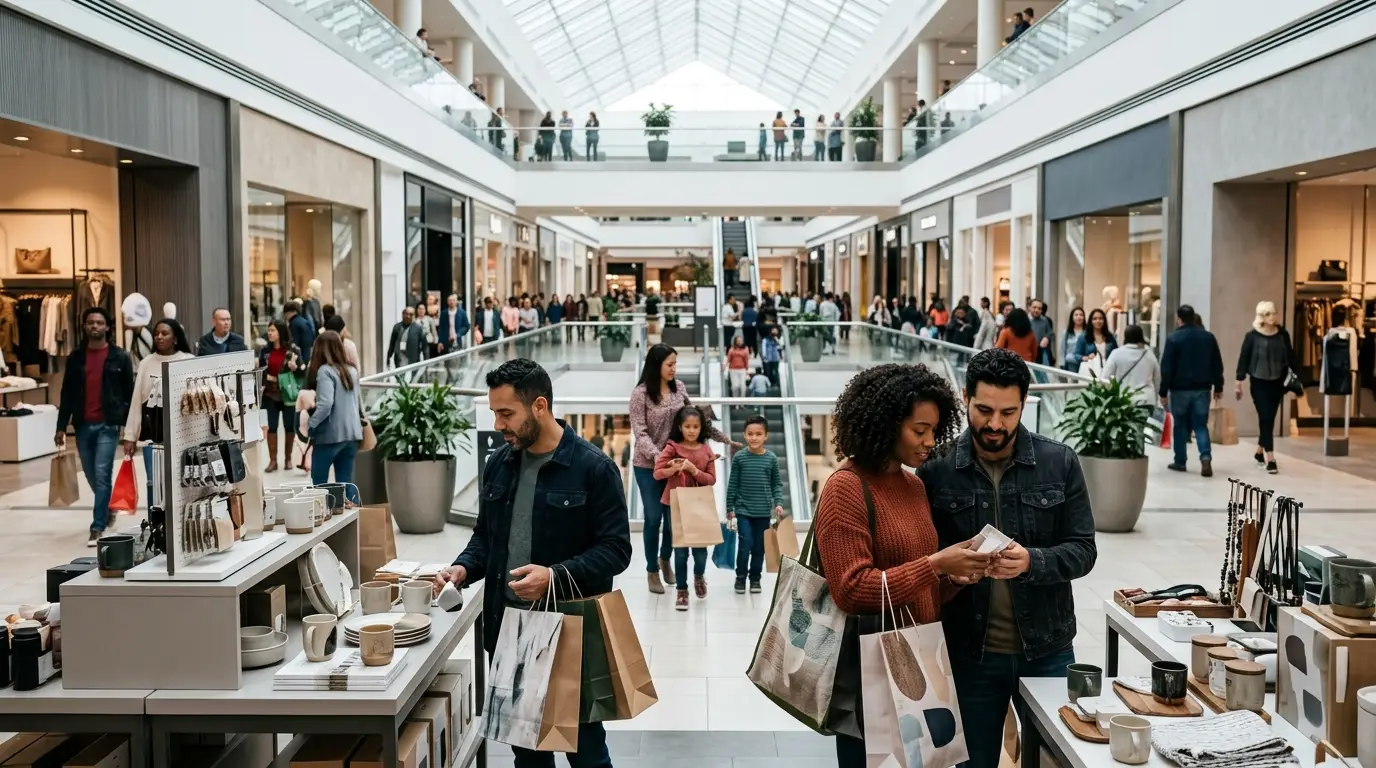


NEW YORK — U.S. retailers are preparing for a challenging holiday shopping season as consumers remain highly sensitive to prices and household budgets.
Companies are increasingly focusing on discounts, private-label products and targeted promotions.
Consumers Continue to Watch Spending
American households have remained active shoppers, but purchasing decisions have become more selective.
Consumers are increasingly comparing prices before making large purchases.
Retailers are responding by expanding lower-cost product lines.
Private-label brands have become particularly important because they can offer consumers lower prices while providing retailers with higher margins.
Discount retailers are also attracting customers who previously shopped primarily at traditional department stores.
Online shopping remains another major factor.
Retailers are investing in artificial intelligence to personalize recommendations and improve inventory management.
AI can help companies predict which products customers are likely to purchase and where demand will be strongest.
That can reduce excess inventory and improve delivery times.
However, retailers continue to face higher transportation and labor costs.
Those expenses make it difficult to maintain low prices indefinitely.
The holiday season could therefore become a test of consumer resilience.
If shoppers remain willing to spend, retailers could report strong sales despite economic uncertainty.
If household budgets tighten, businesses may need to offer deeper discounts.
Investors will be watching sales data closely.
Retail performance can provide important information about the health of the broader U.S. economy because consumer spending accounts for a large share of economic activity.