


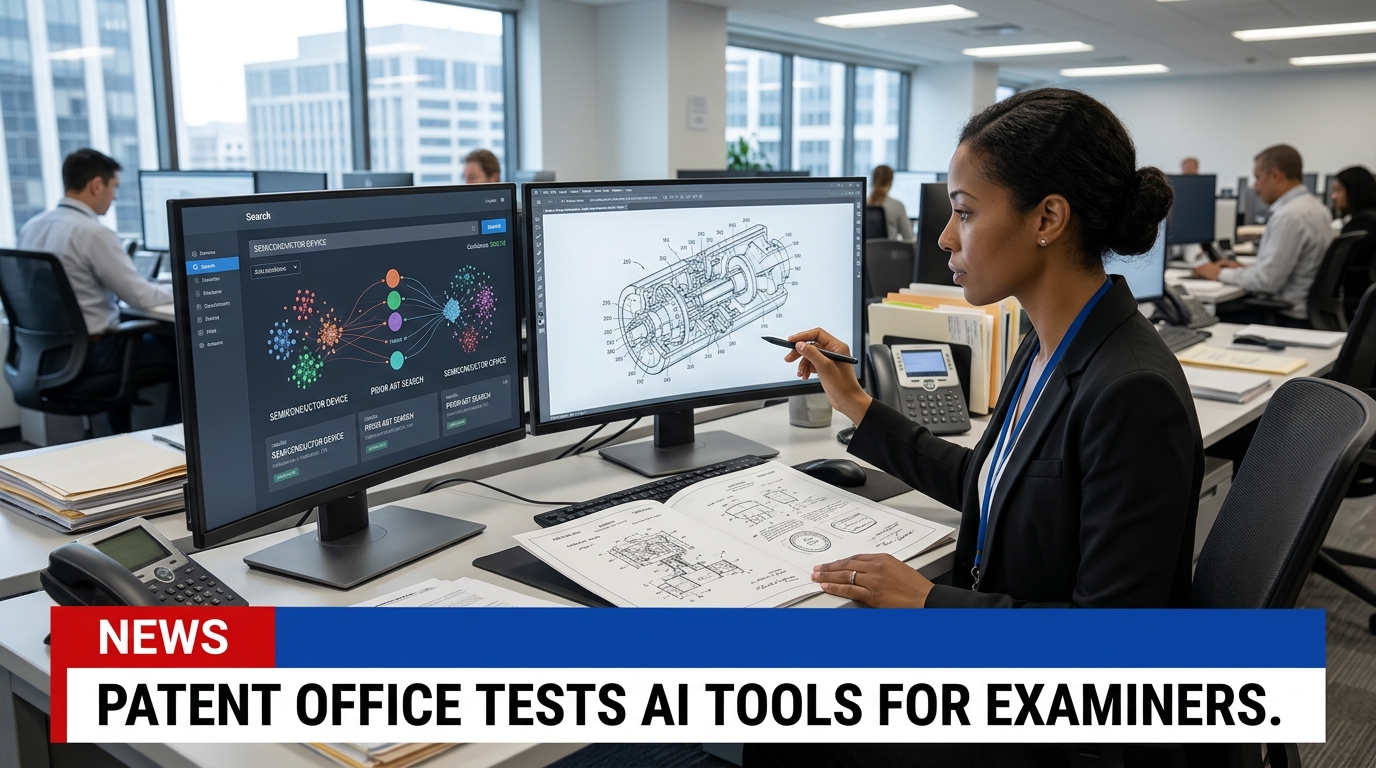


The U.S. Patent and Trademark Office is exploring AI agents to help patent examiners manage their workloads, an initiative that could change how the federal government processes applications for intellectual-property protection.
Acting Commissioner for Patents Barry Schindler has described the potential for AI agents to assist examiners with tasks that can consume substantial time. These systems may be able to retrieve relevant material, organize prior-art searches and support communications during the examination process. The aim is to reduce administrative delays while allowing examiners to focus on substantive questions of patentability.
Patent examination requires careful analysis of whether an invention meets legal standards, including novelty and non-obviousness. Automated tools may help identify documents and patterns, but their output still requires expert review. A system that overlooks relevant prior art or incorrectly summarizes a technical disclosure could affect the quality of an examination if its results are accepted without verification.
The agency’s interest in AI reflects a wider government challenge: how to use new technology to improve service delivery without weakening accountability. Patent applicants, businesses and inventors rely on consistent decisions and predictable timelines. Faster processing would be useful, but only if accuracy and procedural fairness are maintained.
The deployment also raises questions about training, data security and transparency. The agency will need to determine what information its tools can access, how outputs are checked and whether examiners receive sufficient training to recognize mistakes. Applicants may also want clarity about whether and how AI contributes to decisions on their applications.
The reported initiative is still best understood as an effort to explore and deploy support tools, not a replacement of patent examiners with autonomous decision-makers. The agency’s eventual results will depend on how the technology performs in real workflows and whether efficiency gains can be achieved without compromising legal standards.


