


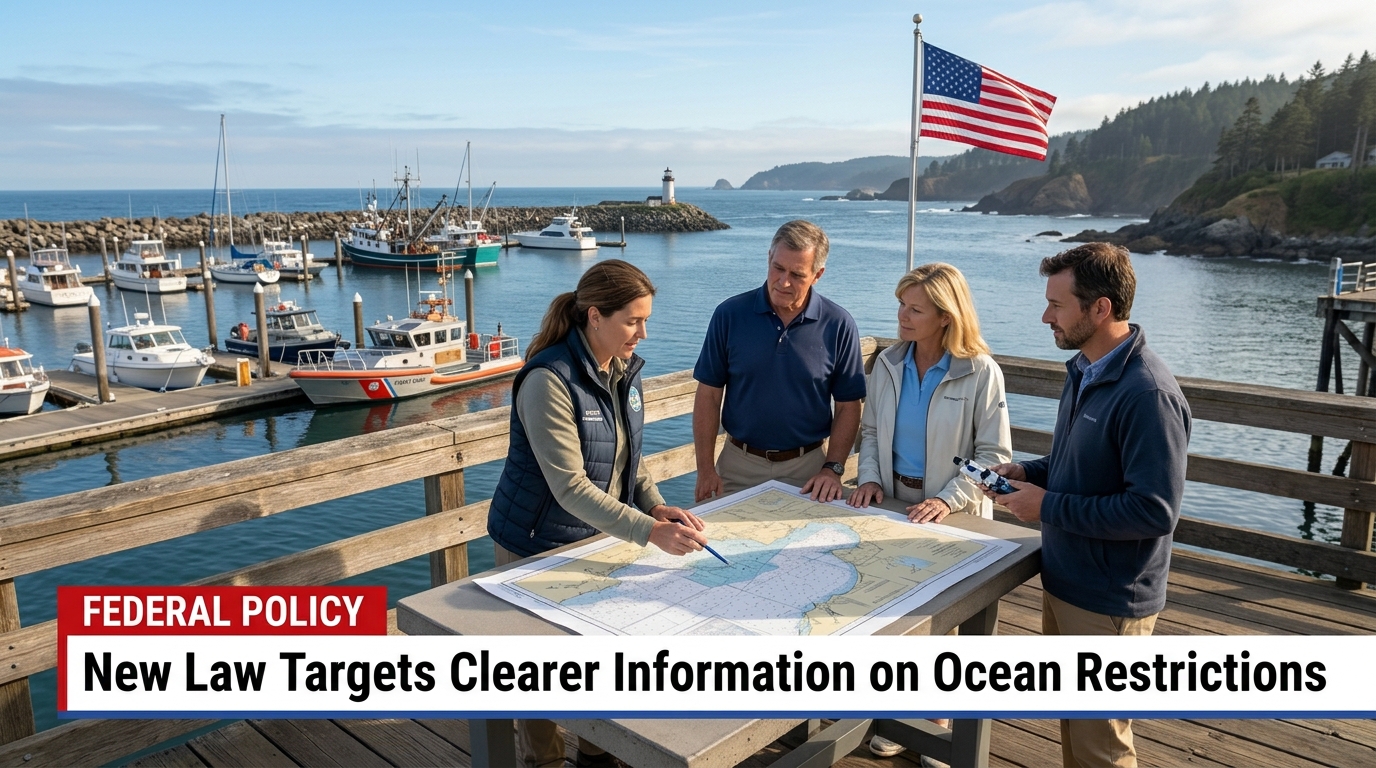


A federal law signed on September 25 requires the Department of Commerce to make geographic information about certain ocean-use restrictions available through a public website. The Modernizing Access to Our Public Oceans Act, Public Law 119-116, focuses on making it easier for the public to identify areas within the U.S. exclusive economic zone subject to regulatory restrictions affecting fishing, boating and other recreational activities.
The measure addresses a practical problem for people using coastal and offshore waters: relevant restrictions may be set through different regulatory processes, and locating the right information can take time.
Making restrictions easier to find
Recreational boaters, anglers and other ocean users often need to understand where activities are permitted and where special rules apply. Such restrictions may be connected to conservation, resource management, safety or other public purposes.
A centralized online source of geographic information could help users find relevant boundaries before planning a trip. It may also help researchers, local organizations and businesses understand the regulatory landscape affecting ocean recreation.
The law’s requirement concerns the availability of information. It does not mean that existing restrictions are being lifted, nor does it replace the legal rules governing specific waters. Users will still need to comply with applicable regulations and consult official notices where details matter.
Transparency and practical access
Public information is most useful when it is accurate, current and easy to interpret. A map can help people identify a restricted area, but the underlying rules may also contain dates, exceptions, activity-specific conditions or other details that cannot be captured by a boundary alone.
The quality of the federal website and the process for maintaining its information will therefore be important. Agencies will need to ensure that geographic data are presented in a way that helps the public understand the restrictions without suggesting that every activity is governed by the same rules.
What happens next
The Department of Commerce is responsible for carrying out the law’s website requirement. The practical test will be whether ocean users can find reliable information without having to navigate a fragmented collection of separate sources.
The measure illustrates how a relatively focused federal law can affect everyday public access to government information. By requiring a more accessible presentation of restrictions, Congress has placed transparency at the center of a policy area where accurate location data can be important to both recreation and compliance.


