


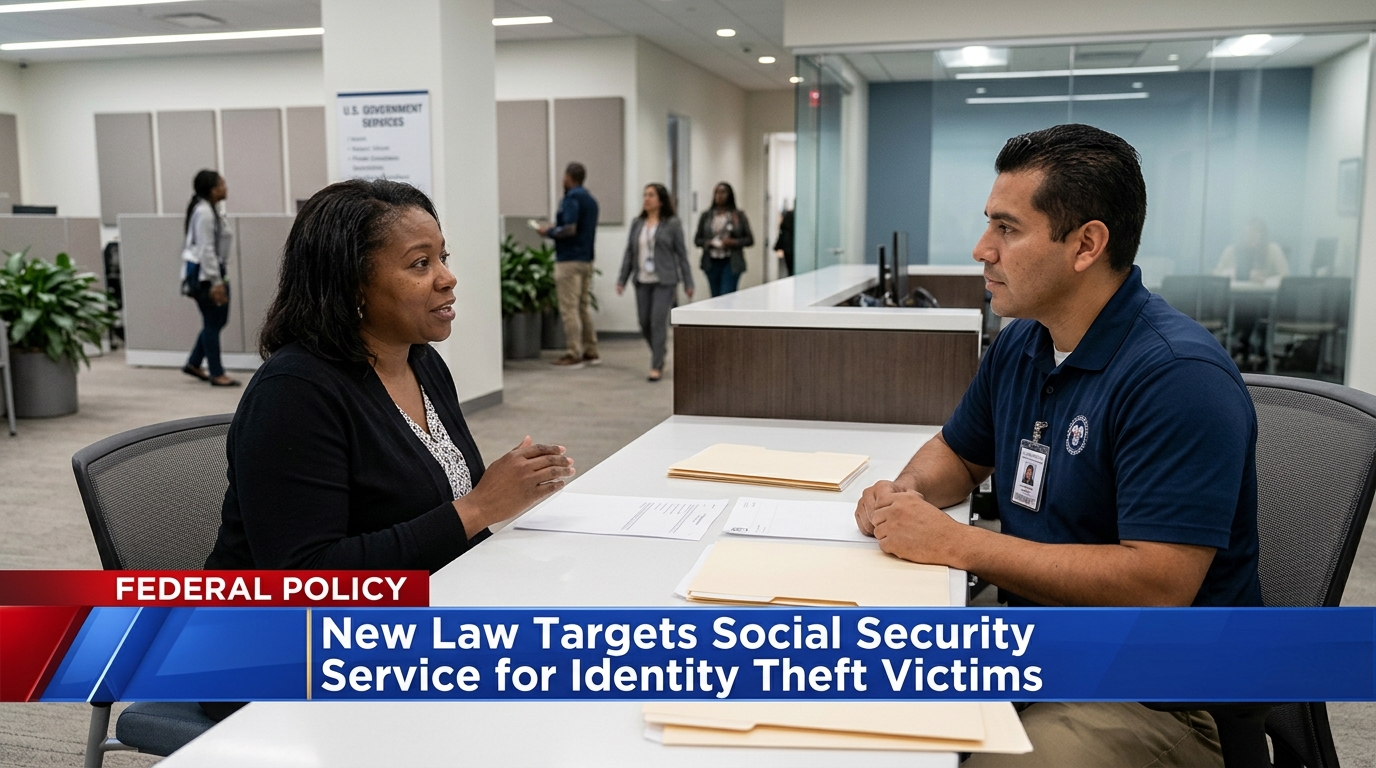


A new federal law signed on October 7 directs attention to how the Social Security Administration serves people affected by identity theft. The Improving Social Security’s Service to Victims of Identity Theft Act became Public Law 119-119, adding another targeted measure to Congress’s ongoing work on public-facing federal services.
Identity theft can create long-running problems for people whose personal information is used without permission. Victims may need to establish that a record or transaction is fraudulent, correct information associated with their identity and communicate with multiple agencies or financial institutions. When a case involves Social Security records, delays or uncertainty can make an already stressful process more difficult.
Why federal service standards matter
The Social Security Administration maintains records used to determine eligibility for retirement, disability and survivor benefits. It also issues Social Security numbers and provides services to people seeking to correct or protect their records.
For victims of identity theft, access to clear information and an effective response process can be critical. Individuals may struggle to determine which documents are required, how to submit evidence or how to track the status of a complaint. A legislative focus on service therefore raises questions about communication, case handling and accountability.
The law’s enactment establishes a federal policy response, but the details of implementation matter. The precise responsibilities assigned to the agency, the reporting or service requirements it must meet and the resources available to carry out those duties will determine how much practical improvement people experience.
Oversight and implementation
Members of Congress routinely hear concerns about wait times, administrative complexity and the difficulty of resolving problems through large federal agencies. Identity theft cases can be especially challenging because the facts vary and some disputes require coordination with other institutions.
The new statute provides an opportunity for lawmakers and agency officials to assess whether existing processes adequately address those cases. Any evaluation should distinguish between changes required by law and administrative steps that may be taken separately.
What beneficiaries should watch
People affected by identity theft should continue to use official Social Security channels and retain documentation of suspected misuse. The enactment of a law does not mean every case will be resolved immediately or that existing verification requirements disappear.
The larger test will be whether the federal government can translate a legislative instruction into a service process that is easier to navigate, more transparent and more responsive to people whose personal information has been compromised.


