


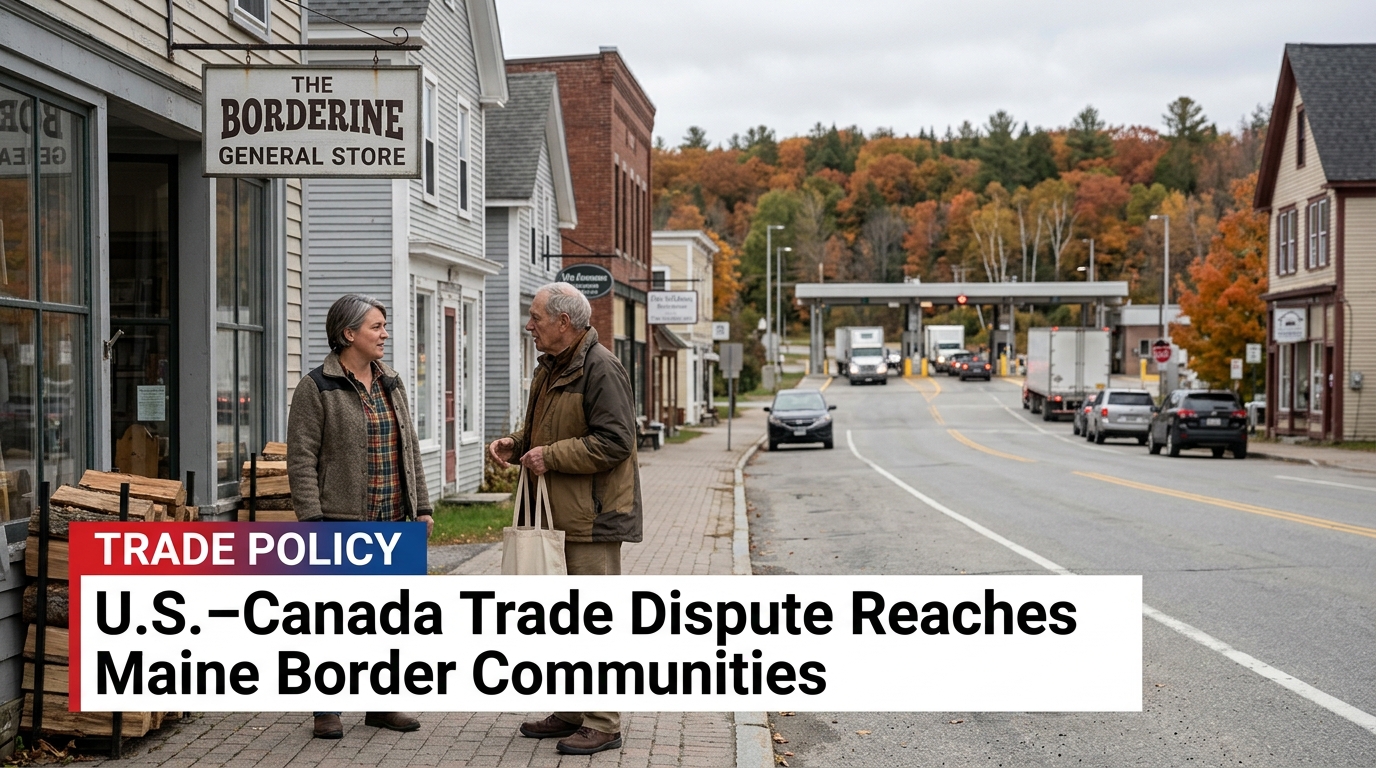


The political dispute over U.S.–Canada trade is drawing attention to communities along Maine’s northern border, where cross-border commerce and daily travel are closely connected to local economic life.
Recent reporting has highlighted the effects of the trade conflict on people and businesses near the Canadian border. The issue illustrates how national decisions about tariffs and trade relations can affect regions far from Washington and major manufacturing centers.
Cross-border ties matter locally
Border communities often depend on Canadian customers, suppliers, workers and transportation routes. Small businesses may rely on predictable cross-border movement, while larger industries can be affected by changes in the cost of materials and the stability of supply chains.
When trade policy becomes uncertain, businesses may delay investments, adjust prices or seek alternative suppliers. The effects vary by sector, and the overall impact depends on which products are covered, how long restrictions remain in place and whether exemptions or negotiated changes are available.
A political question for Washington
Trade policy is shaped by the executive branch, federal law and negotiations with foreign governments. Congress also has an oversight role and may face pressure from constituents whose livelihoods are affected by changes in trade relations.
The political challenge is balancing the administration’s stated objectives with the economic interests of domestic businesses and communities. Officials may argue that trade pressure is necessary to achieve broader goals, while affected businesses may emphasize the cost of uncertainty.
What to watch
The future course of the dispute will depend on government decisions, negotiations and any changes to applicable trade measures. Local businesses will be watching for clarity on tariffs, product coverage and the conditions under which cross-border commerce can continue.
For Maine, the issue is a reminder that foreign economic policy is also domestic policy. Decisions made in Washington can influence employment, prices and investment in communities whose economic relationships extend across the international boundary.


