


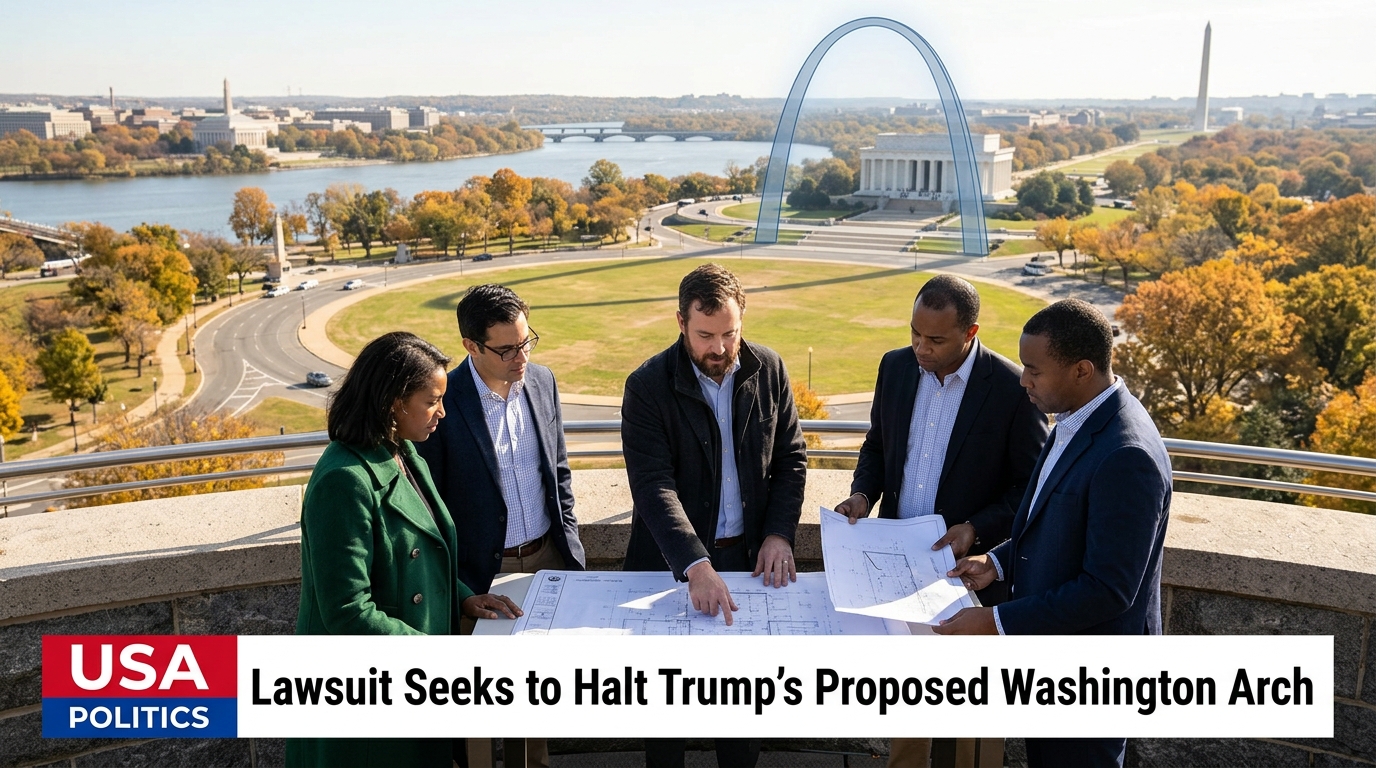


A legal challenge to President Donald Trump’s proposed monumental arch in Washington, D.C., has intensified as opponents seek to prevent construction from beginning before the courts determine whether the project has received the necessary approvals.
Three veterans and a retired architectural historian asked a federal judge on October 22 to halt work on the planned structure. The proposed arch, described in planning documents as approximately 250 feet tall, is intended for Memorial Circle near the Potomac River. The dispute raises questions about historic preservation, the use of prominent federal land and the legal authority required for major changes to the capital’s landscape.
Dispute over authorization
The administration has advanced preliminary planning for the project, but opponents argue that additional legal authorization is necessary before construction can proceed. Their lawsuit challenges the administration’s approach and seeks to prevent work from moving forward while the court considers the claims.
The government disputes the challengers’ position. The central legal question is not simply whether the project has received support from planning bodies, but whether all required approvals and statutory permissions have been satisfied.
A preliminary review or design approval does not necessarily replace other requirements governing federal property, construction and historic sites. Those steps can involve different agencies and separate legal responsibilities.
A broader debate about Washington’s public spaces
Washington’s monumental spaces carry symbolic importance beyond their immediate surroundings. Proposals to add major structures can generate debate over presidential legacy, public access, architectural design and the role of Congress in decisions affecting the capital.
Supporters may see the arch as a lasting civic landmark, while opponents question its location, scale and legal basis. The litigation will determine which arguments are relevant under the governing laws and whether the project can advance while the dispute remains unresolved.
What happens next?
The court has directed the parties to address the schedule for briefing. The National Capital Planning Commission is also expected to consider final site and building plans on November 5, while additional federal decisions remain necessary.
The case does not establish that construction has been permanently prohibited. Instead, it places the project’s legal path under scrutiny at a moment when the administration is seeking to move from planning toward implementation.


