



BERLIN — German industrial leaders are pressing Chancellor Friedrich Merz to adopt a tougher approach toward China as manufacturers struggle with growing Chinese competition and an expanding trade deficit.
The debate is becoming increasingly important for Europe's largest economy as German companies attempt to protect their global market share while maintaining access to China's enormous consumer market.
Industry Warns of Growing Competitive Pressure
German industry groups say Chinese manufacturers benefit from substantial state support and are increasingly competing directly with European companies.
An OECD analysis cited by Reuters found that Chinese manufacturers receive significantly more government support than their counterparts in OECD economies. Germany's trade deficit with China reached €89.3 billion in 2025.
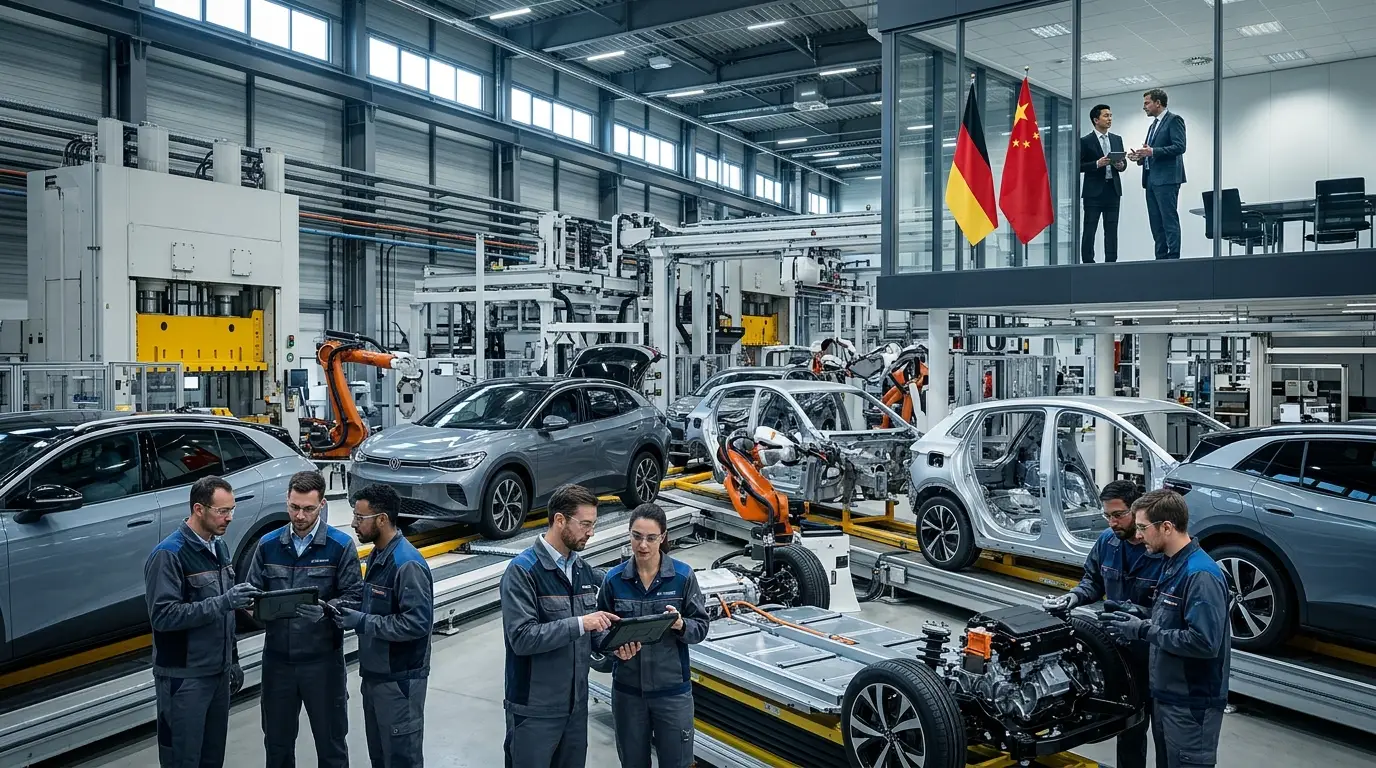
The automotive sector is among the industries feeling the pressure most directly.
German automakers have faced declining market share in China while also confronting increasingly competitive Chinese electric-vehicle manufacturers in European markets.
Industry groups including the BDI and DIHK are calling for stronger European trade defenses.
Merz has adopted tougher rhetoric toward Beijing but faces a difficult political and economic calculation.
Germany remains heavily dependent on international trade, and China is an important market for many German businesses.
A significant escalation in trade restrictions could therefore expose German companies to Chinese retaliation.
Merz has indicated that Germany could support a stronger European position if October trade negotiations with Beijing fail to produce progress.
The debate illustrates a broader shift in Europe's relationship with China.
European governments increasingly want to reduce strategic dependence on Beijing while avoiding a complete economic separation.
For German companies, the issue is particularly sensitive because many have spent decades building production facilities, supplier networks and consumer markets in China.
The coming months could therefore determine whether Germany moves toward stronger trade defenses or continues pursuing a more cautious commercial relationship.