


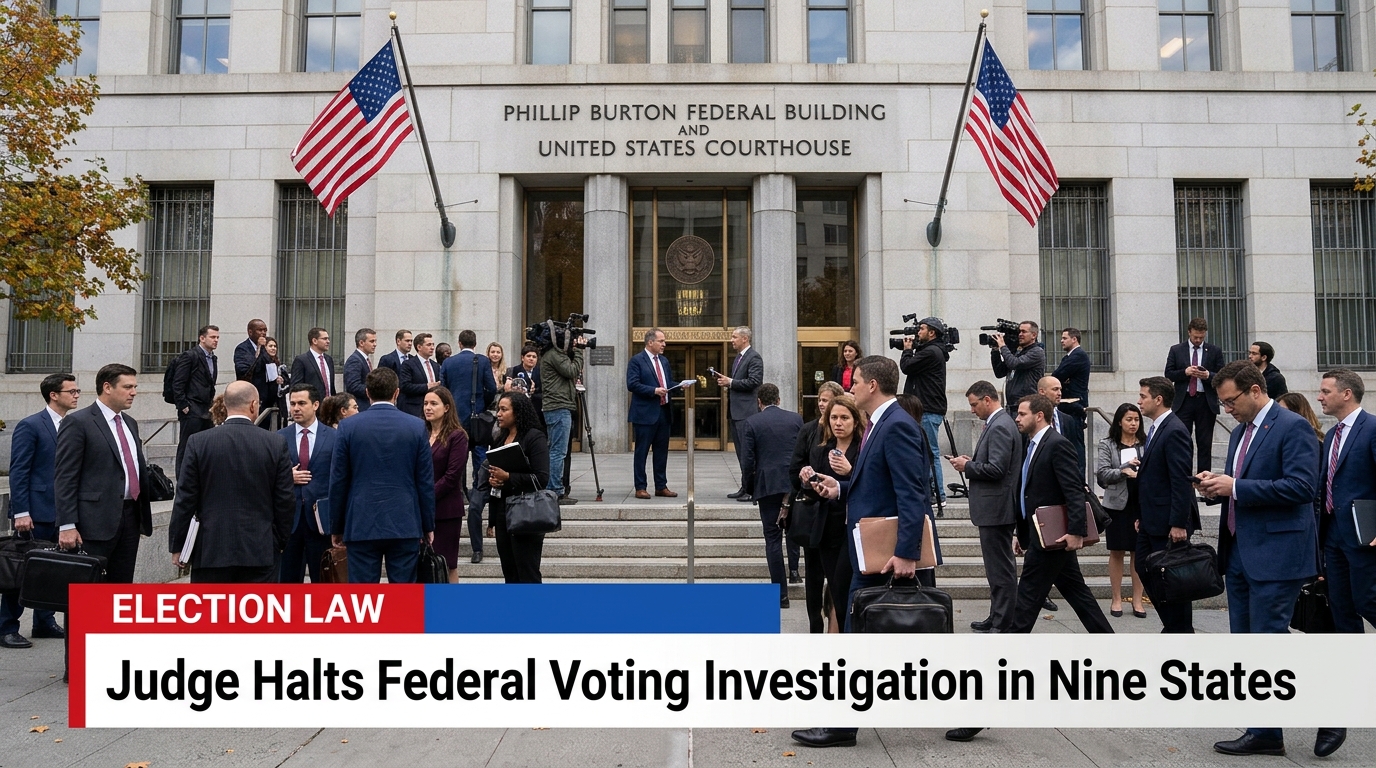


A federal judge has temporarily stopped the Trump administration from continuing a multi-state investigation into alleged noncitizen voter registration, issuing one of the most significant election-related rulings of the final stretch before the November midterms. The order affects investigations in California, Connecticut, Georgia, Missouri, Nevada, New York, Pennsylvania, Washington and Wisconsin.
The administration had argued that the investigations were designed to protect election integrity by identifying potentially ineligible registrations. Civil-rights organizations, election officials and voter-assistance groups countered that the effort relied on unreliable data and risked intimidating lawful voters, including recently naturalized American citizens.
Court questions investigative methods
The judge concluded that the government had not demonstrated that its methods were sufficiently reliable to justify continuing field investigations so close to Election Day. Court filings described situations in which investigators relied on commercial voter databases and incomplete citizenship records rather than a comprehensive federal citizenship database.
Another concern involved the speed of the investigations. Evidence presented during the case suggested that investigators were processing individual reviews rapidly, raising questions about whether meaningful verification was possible before contacting voters.
The ruling does not determine whether noncitizen voting occurs or whether future investigations are prohibited. Instead, it pauses the current investigative campaign until after Election Day while legal challenges continue.
Election officials welcome temporary certainty
Local election administrators say the ruling provides greater clarity during one of the busiest periods of the election calendar. County offices are processing mail ballots, preparing polling places, training workers and responding to voter questions, making stability particularly important.
Voting-rights groups argue that uncertainty surrounding federal investigations can discourage participation, especially among immigrant communities. Supporters of the administration maintain that preventing unlawful voting remains an important federal responsibility.
What's next?
The Justice Department is expected to consider an appeal. Even if appellate courts become involved, election officials will continue operating under existing state procedures unless another court order changes the legal landscape.
The case has become part of a larger national debate over election security, voter confidence and the proper balance between federal oversight and state responsibility for administering elections.


