


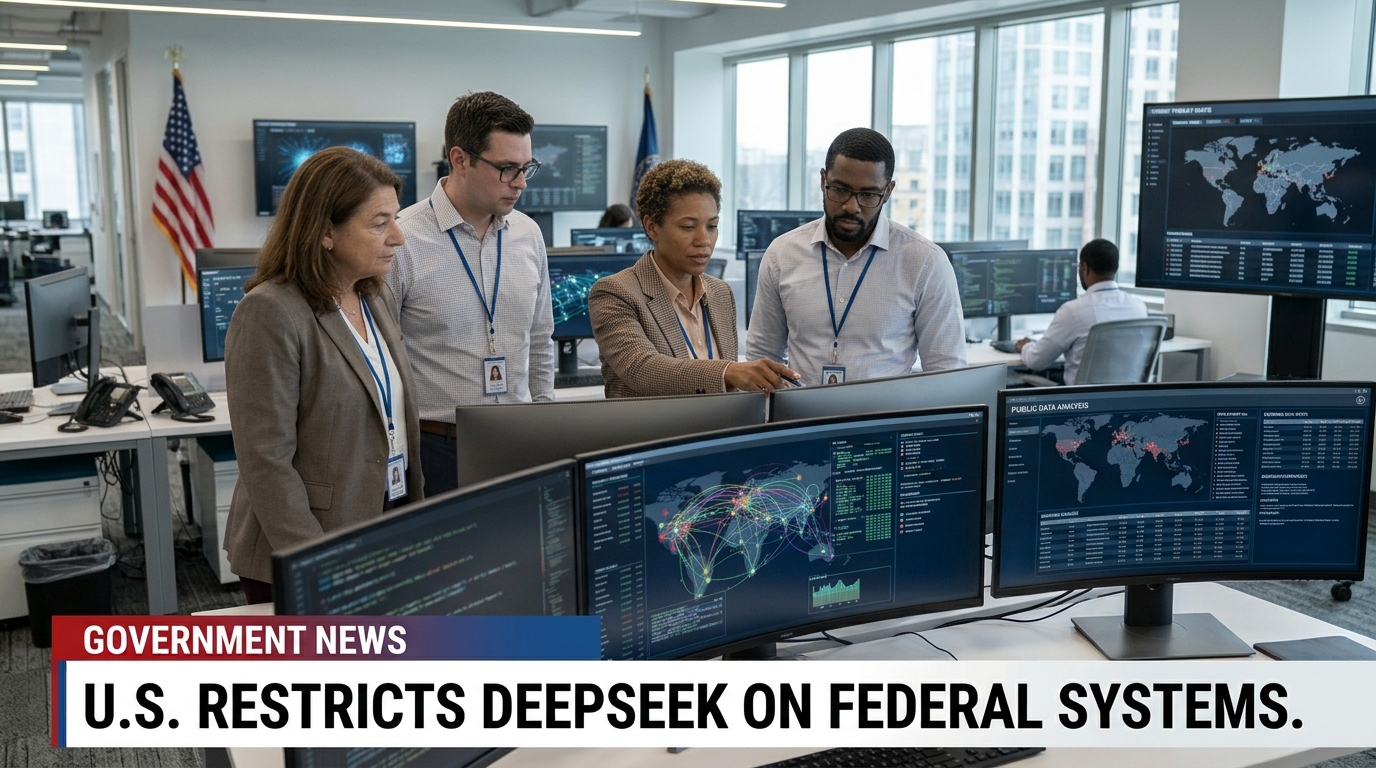


The Trump administration has directed U.S. civilian federal agencies to remove DeepSeek products and third-party services that use the Chinese artificial-intelligence model from government information-technology systems, citing potential security risks.
The directive, described in a Department of Homeland Security memorandum made public on October 19, also bars civilian agencies from acquiring the affected products. The administration’s stated concerns include the possibility that sensitive information could be transferred to China, that the tools could generate intelligence about U.S. individuals or government agencies, and that the software could contain malicious code or security vulnerabilities.
The memo reportedly instructed agencies to monitor traffic to and from government websites for potential threats associated with DeepSeek. Several federal departments and state governments had already restricted the technology before the directive became public.
The decision reflects a national-security approach in which software used by government personnel is assessed not only for performance and cost but also for the jurisdiction, ownership and data practices associated with its developer. Federal agencies often handle sensitive personnel, operational and procurement information, making their technology choices a matter of public administration as well as cybersecurity.
The restrictions apply to government systems; they should not be confused with a general prohibition on private individuals using the model. The administration’s action also does not, by itself, establish that every version or deployment of the software has transmitted sensitive information or contains malware. Those are risks cited by officials as the basis for precautionary measures.
The policy may create practical challenges for agencies that have tested low-cost AI systems for research, drafting or other administrative tasks. Departments will need to identify affected applications, review third-party services and determine whether replacement tools meet their operational needs.
The action also adds to U.S.-China tensions over technology, data protection and strategic competition. Future questions will include how the government assesses comparable tools, how agencies verify compliance and what standards should govern AI procurement across the federal workforce.


