


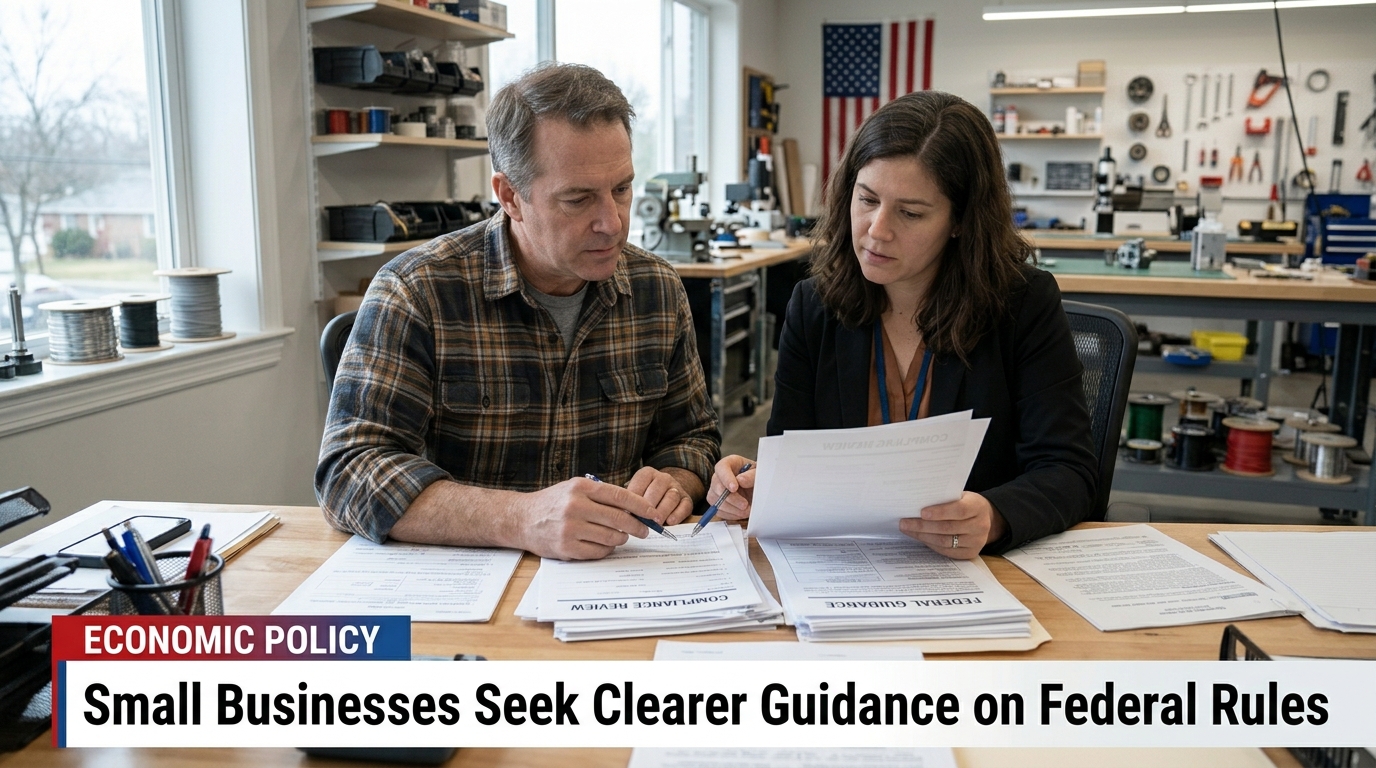


The growing number of federal regulatory changes is placing renewed attention on how government agencies explain compliance requirements to small businesses. For many smaller firms, understanding a new rule can be a substantial task, particularly when requirements involve technical documentation, reporting deadlines or changes to established operations.
The issue has become a practical test of how federal policy is translated into everyday business decisions.
Why clarity matters
Large companies often have legal departments and dedicated compliance teams. Smaller businesses may rely on owners, accountants or outside consultants to interpret new obligations while continuing to manage employees, customers and daily operations.
When guidance is unclear, businesses can struggle to determine whether a rule applies to them, what records they must maintain and when a requirement becomes effective. Uncertainty may lead firms to delay investments or spend money seeking professional advice.
At the same time, clear compliance guidance does not mean that businesses should be exempt from legitimate safety, consumer-protection or national-security requirements.
Agencies have a balancing role
Federal agencies must implement the laws enacted by Congress while ensuring that their regulations are understandable and legally grounded. Depending on the governing statute, agencies may publish explanatory materials, issue implementation guidance or provide formal opportunities for public comment.
The details vary by rule. A proposed regulation may change before finalization, while an already effective rule may have deadlines that businesses must meet even as questions are resolved.
What policymakers can do
Congress can use oversight to ask whether agencies have communicated requirements effectively and whether the cost of compliance is consistent with the objectives of the law. Lawmakers can also consider whether statutes need clarification when agencies encounter recurring ambiguity.
For businesses, the most useful approach is to consult the official text and agency guidance rather than rely solely on headlines or informal summaries.
The broader policy challenge is to make federal regulation both enforceable and comprehensible. Rules are more likely to achieve their intended goals when regulated organizations can understand what is required, when it applies and how compliance will be assessed.


