


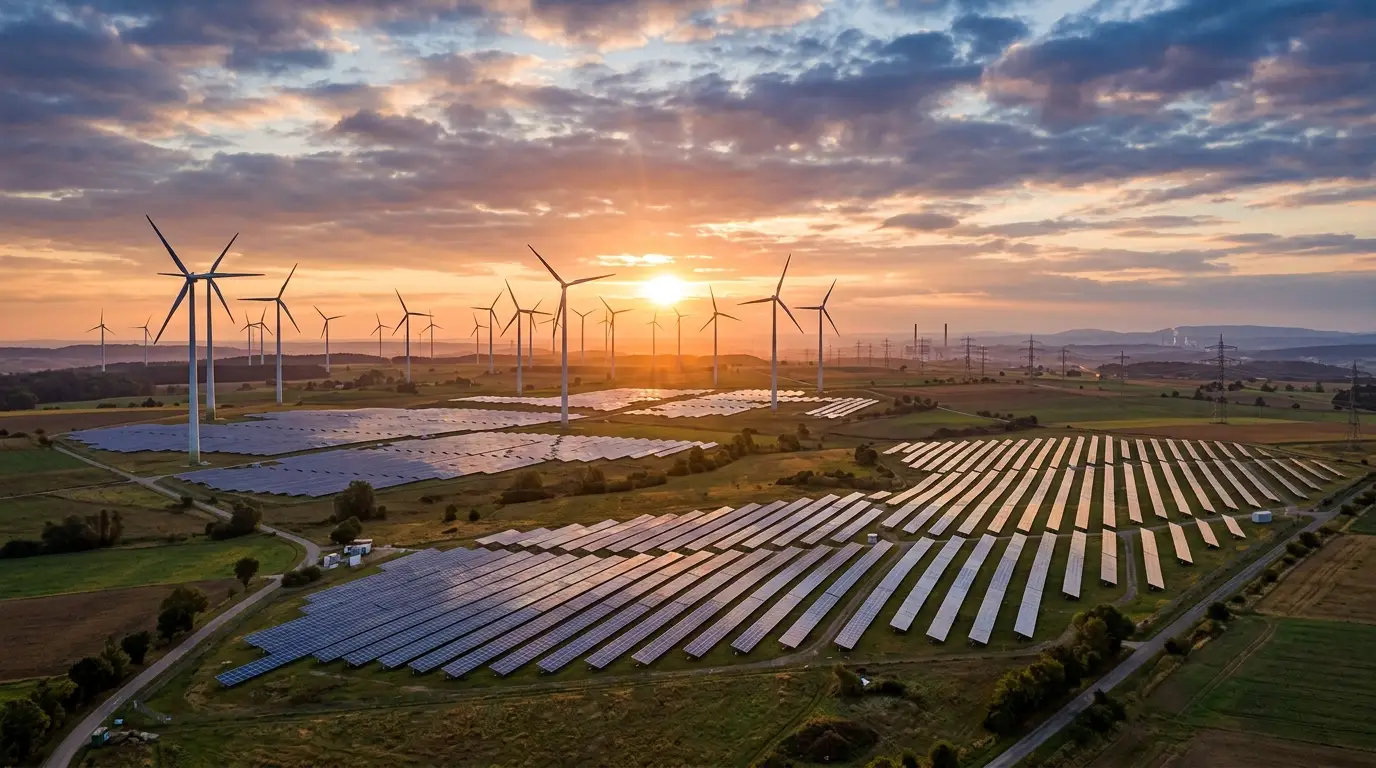


BRUSSELS — Governments across Europe and Asia are accelerating renewable-energy plans as the prolonged conflict involving Iran exposes the risks associated with dependence on imported fossil fuels.
The six-month conflict has disrupted energy markets and forced policymakers to reconsider how vulnerable their economies are to disruptions in oil and gas supplies.
Energy Security Becomes Renewable-Energy Argument
Countries across Europe and Asia are looking to expand solar, wind and other renewable sources as a way to reduce exposure to international energy shocks.
The Strait of Hormuz has become a major concern because of its importance to global energy transportation.
The waterway normally carries a substantial portion of the world's oil and liquefied natural gas supplies.
The conflict has disrupted shipping and contributed to higher energy prices.
Reuters reported that governments are responding by seeking to accelerate renewable-energy investment.
The shift is not entirely new.
Many governments had already established ambitious climate and renewable-energy targets.
But energy-security concerns can provide an additional political justification for investing in domestic electricity production.
Solar and wind projects can reduce dependence on imported fuel, although they require substantial investment in power grids, storage systems and transmission infrastructure.
The economic benefits can also extend beyond energy security.
Renewable projects create construction and manufacturing activity while potentially reducing long-term exposure to volatile fossil-fuel prices.
However, the transition is not without challenges.
Countries still depend heavily on oil and natural gas for transportation, heavy industry and electricity generation.
Replacing those fuels will require technological improvements and significant infrastructure investment.
The Iran conflict has nevertheless demonstrated the potential cost of relying heavily on concentrated energy supply routes.
For businesses, the development could accelerate investment in clean-energy technology, battery storage and electricity infrastructure.
Energy companies may also face pressure to diversify their portfolios as governments strengthen renewable-energy policies.
The geopolitical crisis could therefore have an unexpected long-term consequence: accelerating the global transition away from fossil fuels.