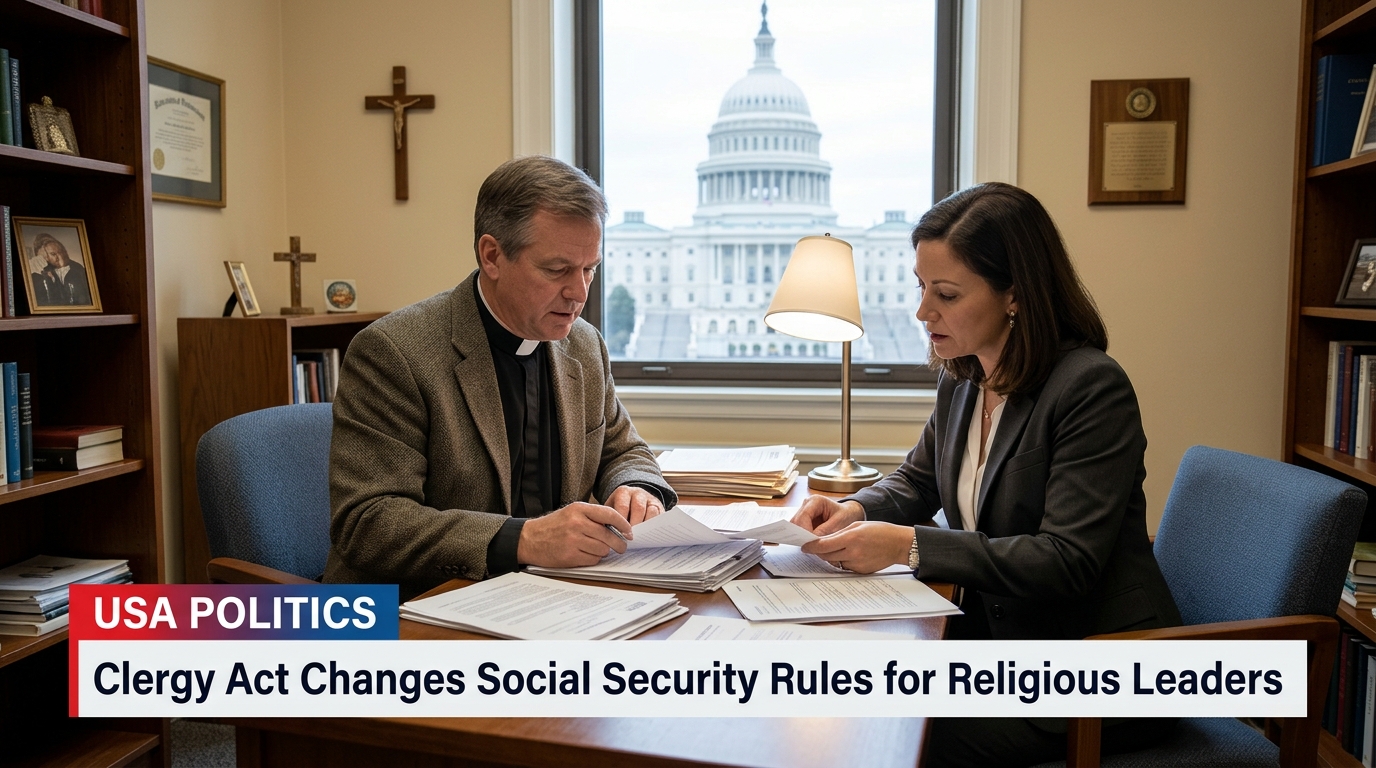


A federal law signed on October 20 has changed an important element of the rules governing Social Security participation by members of the clergy. The Clergy Act, enacted as Public Law 119-125, addresses the process through which certain religious workers may revoke an earlier exemption from Social Security coverage.
The measure is narrow in scope, but it touches on a longstanding question in federal tax and retirement policy: how the government should account for the distinctive employment arrangements of ministers and other qualifying religious workers while maintaining consistent rules for retirement contributions.
Why the rules matter
Many clergy members do not receive wages in the same way as employees of conventional businesses. Their income may include compensation from a religious organization, housing allowances and fees for services. Federal law has therefore developed specific rules for how qualifying ministers report earnings and participate in Social Security.
Some religious workers have previously sought exemptions under the law. Such decisions can affect whether they contribute to Social Security through self-employment taxes and whether their earnings generate future benefits under the program. Reversing an exemption can be complicated because the rules establish specific conditions and deadlines.
The new law modifies the framework for certain individuals who want to change their previous election. Its implementation will depend on the applicable filing requirements and the tax years covered by the statute.
A small law with practical consequences
The measure illustrates how Congress often makes targeted adjustments to federal programs rather than rewriting an entire system. For affected clergy members, the most important questions will be whether they qualify, what documentation they must provide and when a change can take effect.
Religious organizations, accountants and tax advisers may need to review the new provisions to ensure that eligible individuals understand their options. A law changing eligibility or filing rules does not automatically mean every clergy member's status has changed.
What comes next
The legislation is now law, but its practical effect will depend on the statutory deadlines and guidance used to administer it. Clergy members considering a change should review the official law and seek qualified tax advice before acting.
The broader policy issue remains how federal retirement protections can accommodate different forms of work while ensuring that people understand the long-term consequences of their Social Security decisions.