


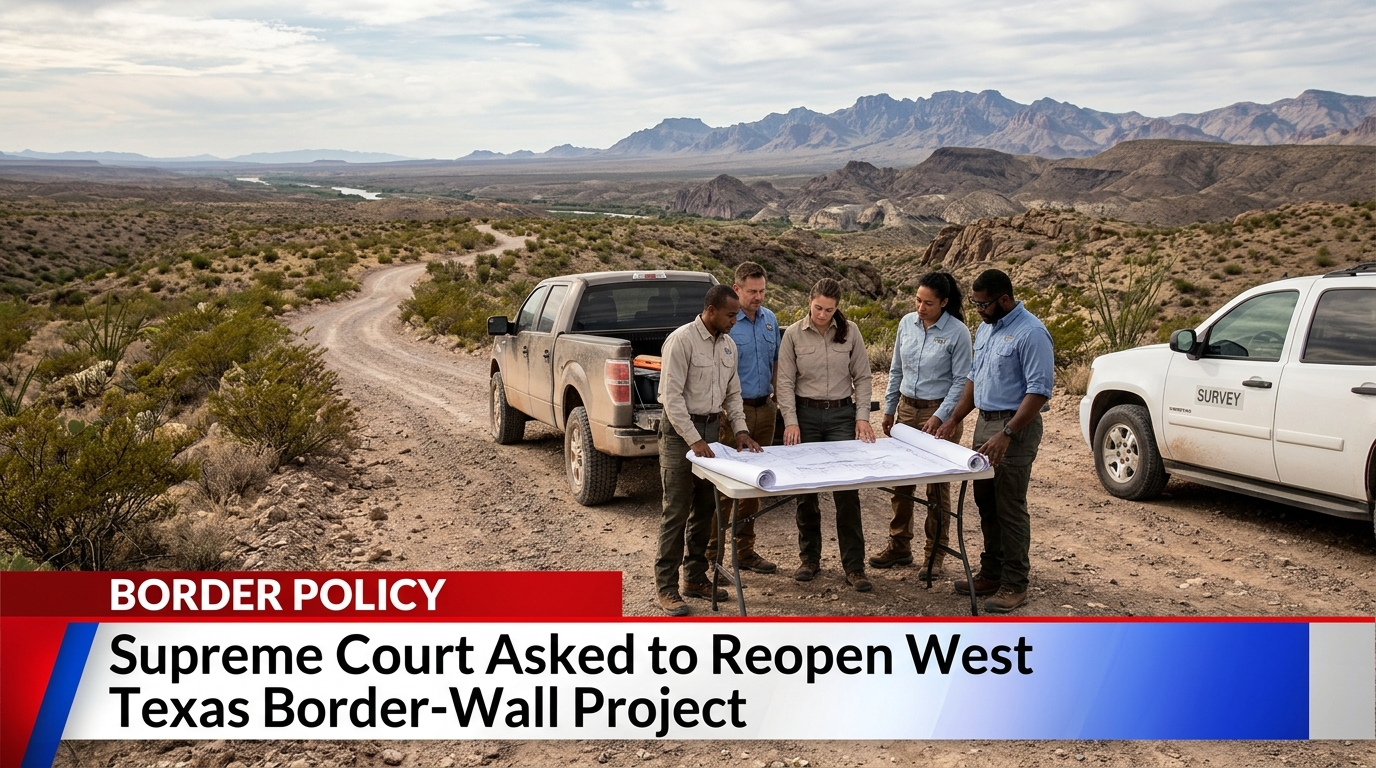


The Trump administration has asked the U.S. Supreme Court to intervene in a legal dispute over proposed border-wall construction in the Big Bend region of southwest Texas. The emergency request seeks to reverse a lower-court decision that blocked construction along a contested stretch of the border.
The administration argues that stopping the project could leave a substantial gap in border defenses. Opponents of the construction have raised concerns about the effects on local communities and the surrounding landscape, as well as whether the government has adequately addressed the legal requirements governing the project.
Security arguments meet local concerns
The Big Bend region includes remote desert terrain, rugged mountains and areas valued for recreation and conservation. Infrastructure projects in such locations can involve difficult engineering and environmental questions, alongside federal responsibilities for border enforcement.
The administration maintains that barriers are an important part of its border-security strategy. Critics argue that a project’s stated security purpose does not remove the need to comply with applicable laws or properly assess local impacts.
The court dispute focuses on whether construction can proceed while the underlying legal challenge continues. An emergency application asks the Supreme Court to act before the ordinary litigation process has run its course; it does not itself mean the justices have agreed with the government’s position.
The limits of emergency court review
When the Supreme Court considers emergency applications, it may decide whether a lower-court order should remain in force while litigation proceeds. Such decisions can affect what the government may do immediately without resolving every issue in the broader case.
That distinction matters here. A decision allowing construction to resume would not necessarily settle all questions about the project’s legality, just as leaving the lower-court block in place would not necessarily determine the final outcome.
What comes next?
The Supreme Court must decide whether to grant the administration’s request. The lower-court litigation and any further proceedings will shape the project’s longer-term legal status.
The case highlights the tension between executive claims of urgent national-security needs and the role of courts in reviewing government action. The eventual outcome could affect not only this section of the border but also how future infrastructure projects are handled when security objectives collide with statutory or environmental constraints.


