


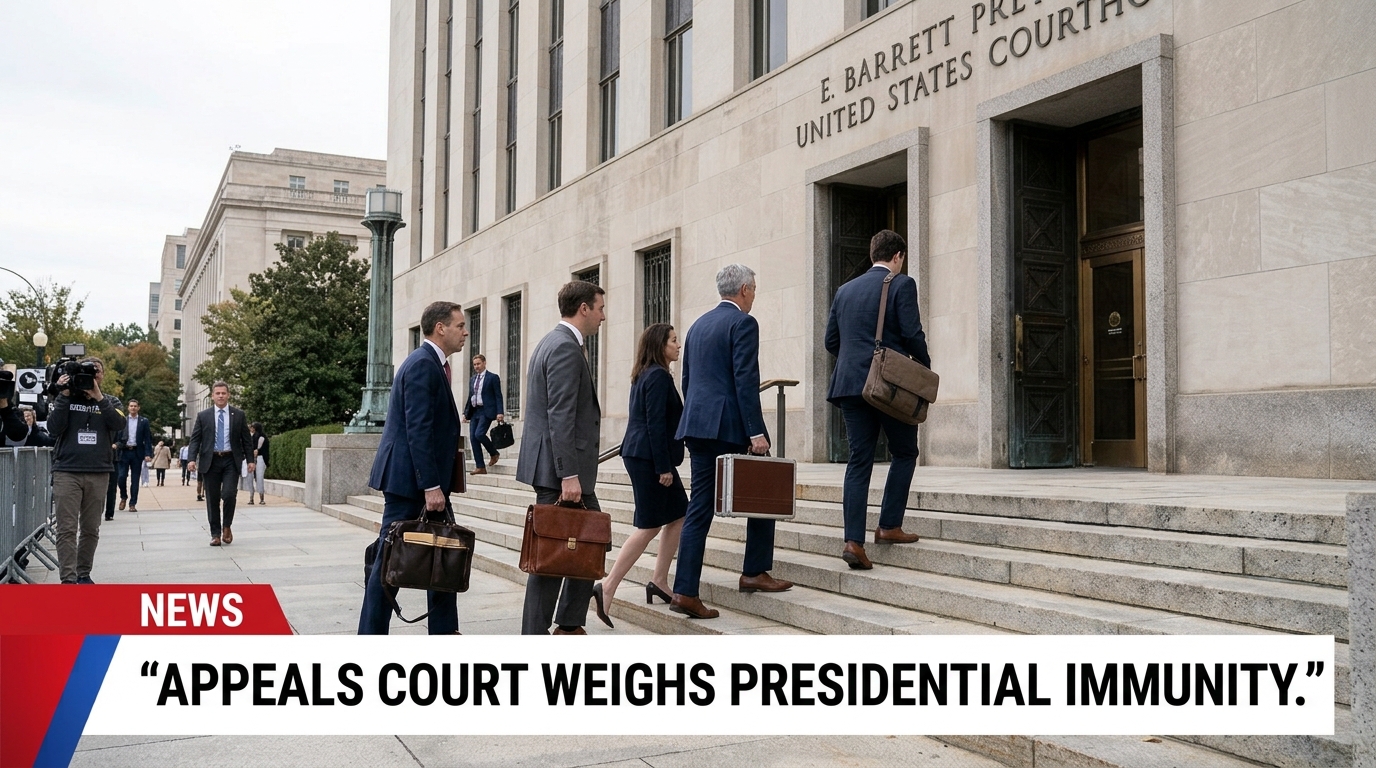


A federal appeals court is considering arguments over whether Donald Trump can invoke presidential immunity to dismiss a criminal case brought by special counsel Jack Smith concerning efforts to overturn the 2020 election result and events surrounding the January 6, 2021, attack on the U.S. Capitol.
Trump’s lawyers argue that conduct connected to his presidency is protected by constitutional immunity. They have also raised arguments concerning his Senate impeachment acquittal. Smith’s position is that presidential status does not create blanket protection from criminal liability, particularly for alleged conduct involving private individuals or actions outside the legitimate scope of official duties.
The dispute presents difficult questions about the relationship between the presidency and the criminal justice system. Courts must distinguish official presidential acts from conduct that may fall outside protected constitutional functions. That distinction has implications not only for Trump’s case but also for how future administrations understand the legal boundaries of presidential authority.
The appeals court’s task is not to decide whether every allegation is true. It is to assess the legal arguments governing whether the prosecution can proceed and which claims, if any, are barred by immunity. A hearing does not amount to a final ruling, and the judges may issue a decision that leaves further questions for later proceedings.
The case could affect the schedule and scope of the prosecution, depending on how the court resolves the immunity questions. Further appeals are also possible, potentially bringing the dispute back before the Supreme Court.
The proceedings have renewed attention to the constitutional balance between protecting presidents from improper interference with official duties and ensuring that former presidents remain accountable under the law.
Because the legal questions are unusually consequential, the court’s reasoning may carry significance well beyond this individual case. Any ruling is likely to be closely examined by constitutional scholars, prosecutors and future administrations.


