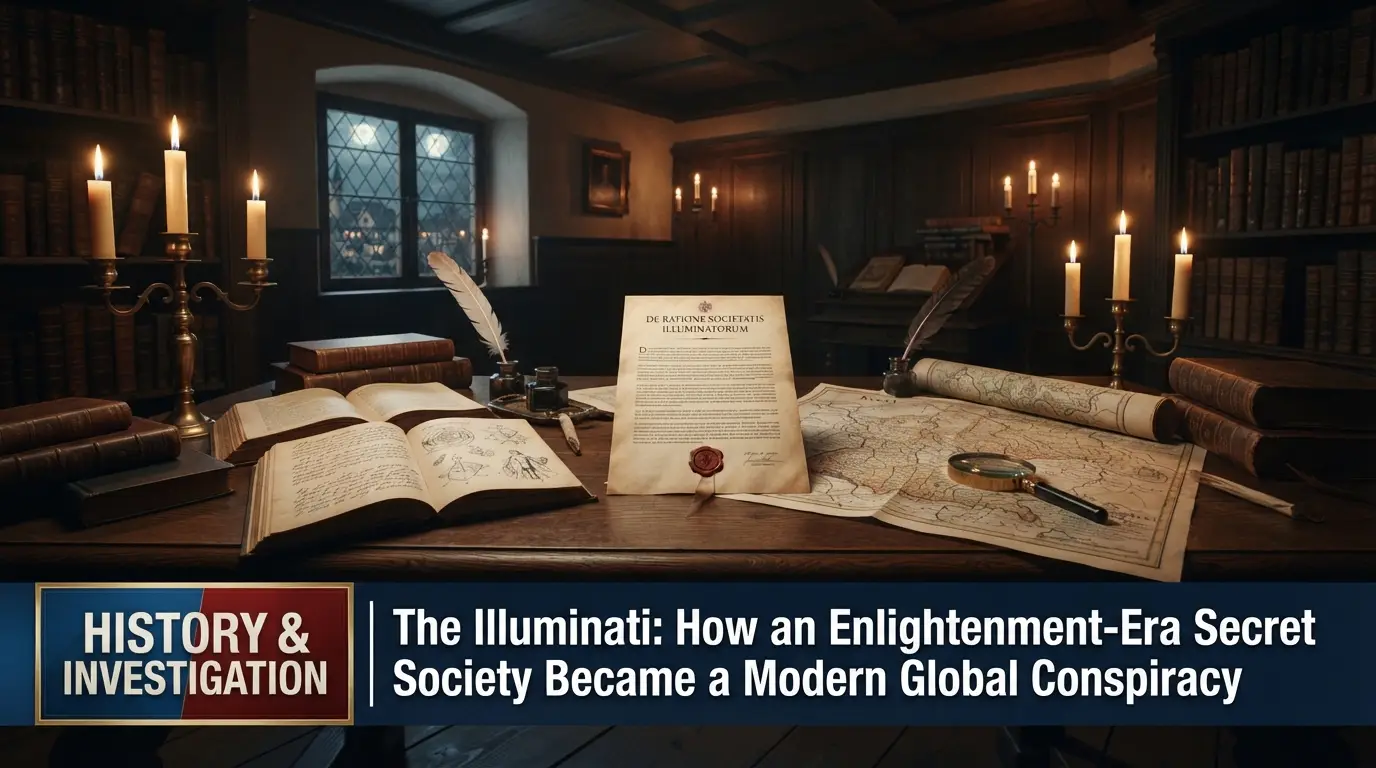





GOTHA, GERMANY — New academic research is prompting historians to revisit the story of the original Illuminati, the 18th-century secret society whose name has become one of the most recognizable symbols of modern conspiracy culture.
Researchers at the University of Erfurt's Gotha Research Centre say newly examined evidence indicates that the Bavarian Illuminati continued to exist until 1787, longer than previously believed. The research coincides with the 250th anniversary of the organization's founding.
Separating Historical Records From Modern Myth
The historical Illuminati was founded in Bavaria in 1776 during the Enlightenment.
The organization attracted intellectuals and academics and promoted ideas associated with reason, education and opposition to abuses of political and religious power.
Authorities eventually outlawed the organization.
Its disappearance did not end public fascination with the group.
Over subsequent centuries, writers and political movements began attributing major historical events to a supposedly surviving Illuminati network.
Those claims helped create the modern mythology surrounding the name.
Historians distinguish between the documented organization and later conspiracy narratives.
The recent research is important precisely because it focuses on surviving historical documents rather than modern speculation.
Researchers are cataloguing writings and records connected to members of the organization.
That work provides historians with an opportunity to better understand how the group operated and why it attracted attention during the Enlightenment.
The 250th anniversary has also generated renewed public interest.
For American audiences familiar with Illuminati references in films, music and social media, the historical record provides a useful distinction.
The real organization was a documented 18th-century society.
Claims that it secretly controls modern governments, financial institutions or celebrities are not established by the historical evidence discussed by researchers.
The continuing fascination therefore says as much about modern culture as it does about the original organization.